
Scheduled sharps collection for sealed containers
We collect approved, sealed sharps containers from pharmacies, healthcare organisations, council programs and approved commercial sites on a schedule agreed for each location, and record every visit.
On this page: site assessment, what we collect, frequency, service records and common questions.
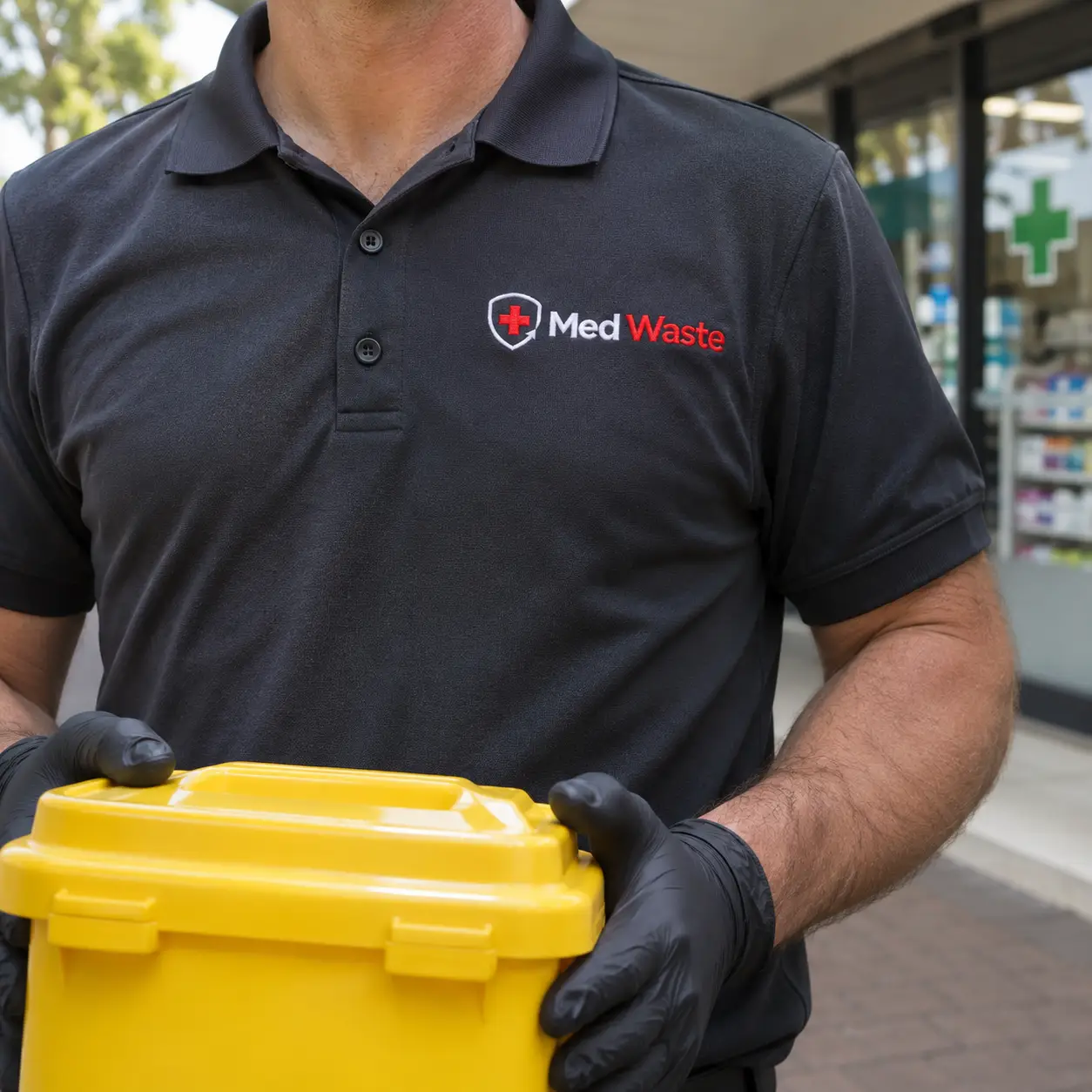
It starts with a site assessment
Before the service begins we confirm what each site needs, so the collection plan fits how your premises operate.
- Locations, site contacts and access arrangements
- Container types in use and expected volumes
- The waste presented, to confirm it is within scope
- Collection frequency and access windows
- The records and reporting format you need
What we collect, and what we don’t
Accepted, inside an approved closed sharps container
- Needles and syringes
- Lancets
- Pen needles
- Other approved items that can cut or pierce the skin
Containers must be closed, secure, undamaged, not leaking and not overfilled.
Not included in this service
- Loose sharps, or open, overfilled, damaged or leaking containers
- Pharmaceuticals and medicines
- Cytotoxic, anatomical or pathology waste
- Chemicals, liquids or radioactive waste
- General or unidentified waste
- Public needle-litter response and emergency call-outs
Unsure whether an item is accepted? Ask the team before placing it in a container.
An agreed frequency, then a consistent visit
Collection frequency is set around your container volumes, site requirements and route availability, and reviewed as your needs change. Regular collections help prevent full containers sitting on site longer than they should.
On collection day
- We attend within the agreed access window.
- Sealed containers are checked and collected, and replacements left where included in your plan.
- Anything not fit for collection is recorded as an exception and the site contact is told.
- Collection details and photographs are recorded for your service records.
Service records you can check
Each collection can be recorded with the location, date, completion status, container details, photographs and any exceptions. Supporting disposal records are provided where agreed in your service plan.
Location
Which site and collection point
Date and status
When we attended and whether it was completed
Containers
What was presented and collected
Photos
Evidence taken at the collection point
Exceptions
What was not collected, and why
Common questions
How often can sharps be collected?
Frequency is agreed for each site based on container volumes, site requirements and route availability. Regular scheduled services and project-based arrangements can both be discussed.
Do containers need to be sealed?
Yes. Sharps must be in an approved, securely closed container that is not damaged, leaking or overfilled. Containers that do not meet this are recorded as an exception and left on site.
Can you service multiple locations?
Yes. Multi-site services are planned with a central contact, an agreed site list and consolidated reporting.
Can you provide collection records?
Yes. The collection confirmations, photographs and supporting disposal records you need are agreed during service setup.
What if we need an additional collection?
Contact the team as early as possible. Additional collections are assessed against the site, waste profile, route and availability. We do not offer an emergency call-out service.
Do you collect needles found in public places?
No. This is a scheduled commercial service for approved containers at agreed sites. Report discarded needles in public places to your local council.
Get a quote for your sites
Tell us about your sites, containers and how often you need collection. We will review your requirements and discuss a suitable service plan.